

OI Type II – Does it have to be lethal?
Interview with Dr. Ricki Carroll, paediatrician at Nemours Children’s Hospital in Wilmington, Delaware, USA
Who are you & what is your relationship to OI?
My name is Dr. Ricki Carroll. I think of myself as a complex care and palliative care paediatrician for people with skeletal dysplasias and OI. I am a part of the multidisciplinary OI team at Nemours Children’s Hospital in Wilmington, Delaware.
Tell us about your work on OI type II and prenatal care!
When OI is suspected or confirmed in the prenatal period, families may be counselled that the diagnosis is lethal or severely life-limiting based on prenatal ultrasound findings or genetic testing. However, the most severe types of OI, can often be difficult to distinguish from each other early on. This can make it exceedingly difficult to prognosticate survival probability prenatally. In addition, heightened diagnostic awareness and improved treatments, particularly in severe forms, have increased the number of individuals living with OI.
Advancements in technology and the option for life‐sustaining interventions have allowed more infants with “lethal” OI to survive. Our OI team noted this at first anecdotally, with many families coming to us for a second opinion having been told that their infant had lethal OI and then, after choosing to deliver in our advanced delivery unit at Nemours, their infant was able to survive, sometimes with surprisingly little medical support needed.

After this story recurred a number of times, we decided to look at outcomes more closely. We reviewed the charts of infants with osteogenesis imperfecta cared for in our neonatal intensive care unit (NICU) between 9/2019 and 8/2024. Inclusion criteria were any infant with OI who received care in the NICU, regardless of birth hospital. Excluded were patients without a diagnosis of OI and those who did not receive care in the NICU.
After refining the list to 18 individuals, we completed a comprehensive chart review including prenatal, birth, neonatal, paediatric medical and surgical histories. We specifically examined prenatal ultrasound findings as well as qualitative narrative comments. Genetic variants were reviewed in ClinVar for prior description of lethality association. This work was completed under IRB approval 2123944 through Nemours Office of Human Subjects Protection.
In our most recent publication, we describe perinatal outcomes of infants referred to a single specialized center after receiving a prior diagnosis of possibly lethal, lethal or type II OI where parents sought medical intervention after birth. We also outline advances in respiratory and feeding support needs, as well as length-of-stay for these neonates. The success of our multidisciplinary approach to neonatal OI care both challenges previously defined expectations for this patient population and offers a chance at survival.
What were your most interesting findings and conclusions?
In examining correlations between prenatal diagnosis with gestational age, birth weight percentile, length of hospital stay, respiratory support at discharge, feeding support at discharge or need for VP shunt, we did not identify significant differences between groups. Overall, four individuals were born prior to 37 weeks (two preterm labor, one preeclampsia, one elective palliative), with one in the nonlethal prenatal diagnosis group and three in the lethal/possibly lethal group.
We observed five individuals who were <1%ile for birth weight based on gestational age, with one in the nonlethal group, three in the lethal/possibly lethal group and one in the unknown group. All infants received bisphosphonates at a median age of 14 days (range 6-110 days). In the backward elimination logistic regression analysis, we did not observe significantly correlated variables, including birth weight percentile, length of hospital stay or need for support at discharge, to prenatal lethal/possibly lethal group.
In total, 12 of the 18 patients were given the diagnosis of lethal or possibly lethal OI. The families in this cohort pursued care at a specialized neonatal OI center. No infants required chest compressions in the delivery room, and only one received intubation and invasive mechanical ventilation in the delivery room. All patients survived to initial hospital discharge, and 16 of the 18 are alive today. The majority of these infants do not rely on breathing or feeding support.
Furthermore, while there is a trend, infants with predicted lethal or possibly lethal OI did not demonstrate significantly longer lengths of stay or need for respiratory or feeding support at discharge compared to those predicted to have milder phenotype.

What is the most important take home message for clinical work?
Moderate or severe OI is often diagnosed prenatally based on ultrasound findings and genetic testing may be labeled as lethal. In our experience, we do not observe that lethal or possibly lethal diagnoses prenatally were correlated with medically relevant outcomes such as need for respiratory support at discharge or need for feeding support at discharge.
16/18 individuals are alive, with a minority requiring either respiratory or feeding support. With a multidisciplinary team approach to neonatal care, outcomes may be optimized. Infants formerly diagnosed with lethal OI may survive. Given our findings, and lack of correlation of prenatal assessments with survival and other medical outcomes, we recommend all families be given the option to pursue medical interventions.

Do you see any dilemmas connected to availability of expertise, equipment and MDT healthcare connected to these babies? What should those that cannot travel to an expert center do? Do we risk rescuing babies who will have a poor life quality?
Great questions! We did not specifically study parent-perceived quality of life of their children with OI in this study. We know that psychosocial quality of life measures of people living with OI are described as similar to the general population. Of course, not everyone has access to a multidisciplinary OI team. However, I think the first step is finding a team willing to try, i.e. willing to offer life-sustaining interventions. With optimized breathing support and adequate pain control in the first few weeks of life, many infants can survive, and this can be offered even with a full OI team. And our team is always willing to offer general guidance from a distance.
There are numerous stories of parents of children with OI who were told that their kid would never survive at birth (or before birth). And later in life these people with OI are thriving. What is your advice to those who give prenatal advice? What about advice to parents?
My advice to those in the healthcare community giving prenatal guidance is to leave prognosis open-ended and allow for the opportunity for life-prolonging interventions if that aligns with a family’s wishes for their child. For families who are facing a new prenatal diagnosis of OI, I encourage you to reach out to the OI community for information and support. And, it is always reasonable to obtain another opinion and gather information before making a decision.
There is no consensus on the definition of OI type II. Some say that it’s not type II if the baby does not die. And some have another definition – what is your opinion on this?
I think we should be moving away from the diagnosis of Type II OI, which was used as a label retrospectively for infants that died in the perinatal period during a time period when many medical interventions and knowledge we have today were not available. Instead, I prefer to use the classifications of mild, moderate, and severe OI. I think it is very hard to define what “lethal” is today because it is dependent on family goals and wishes for their infant and we have many interventions today that can help a child survive who would not have survived a century ago.
Any questions we should have asked?
We are thankful to the families for allowing us to care for their children and share their stories!
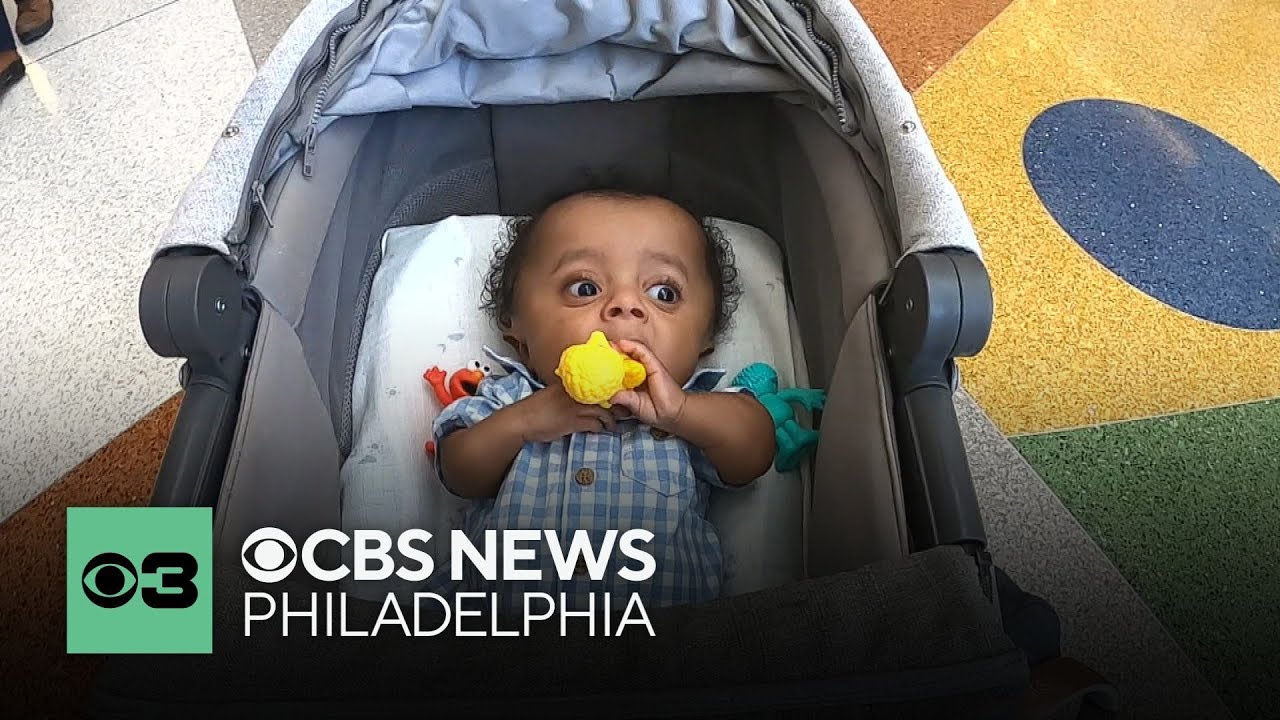
The project has received a lot of attention in the media. Below you can find a news story from CBS Philadelphia.
This article has first been published in OIFE Magazine 2025-03.


